Cedar & Breath Stand steady. Breathe first.

Writing

Writing

Four longer pieces about the parts of standing practice that do not fit into a pose guide: what balance actually is, what the foot is doing, what a long hold feels like, and how to practise at home without a studio.

Four pieces

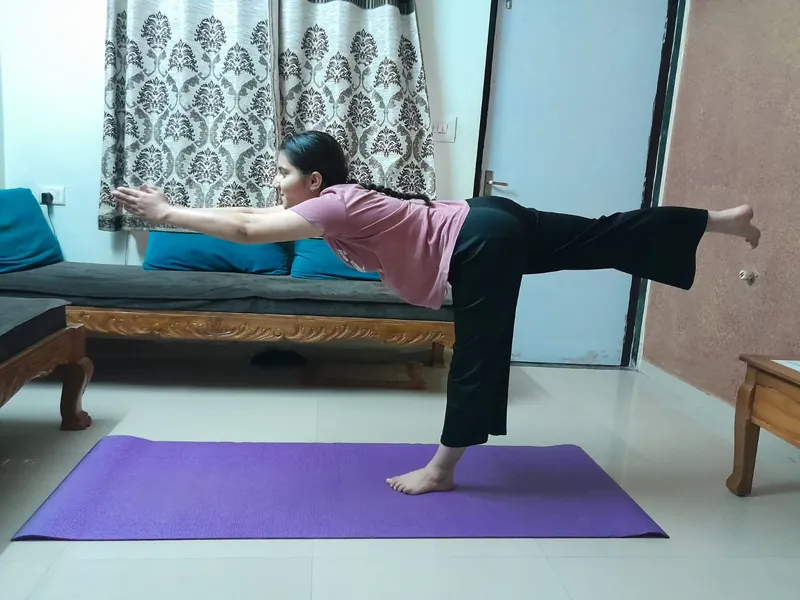
A person balancing on one leg in a living room, torso and
                        lifted leg level, with a sofa and a mat behind them.

What balance actually is, and why it wobbles

Three separate systems arguing about where you are in space, and what it means when they disagree. Why a wobble is information rather than a failure, what you are really practising when you practise a balance, and why the second side is always worse.

Balance12 minute read

A close view of conifer needles radiating from a branch.

The standing foot

Twenty-six bones, thirty-three joints and more than a hundred muscles, tendons and ligaments, all of it under a part of you that spends most of its life inside a shoe. The three points of contact every pose on this site is built on, and why we take socks off.

Technique10 minute read

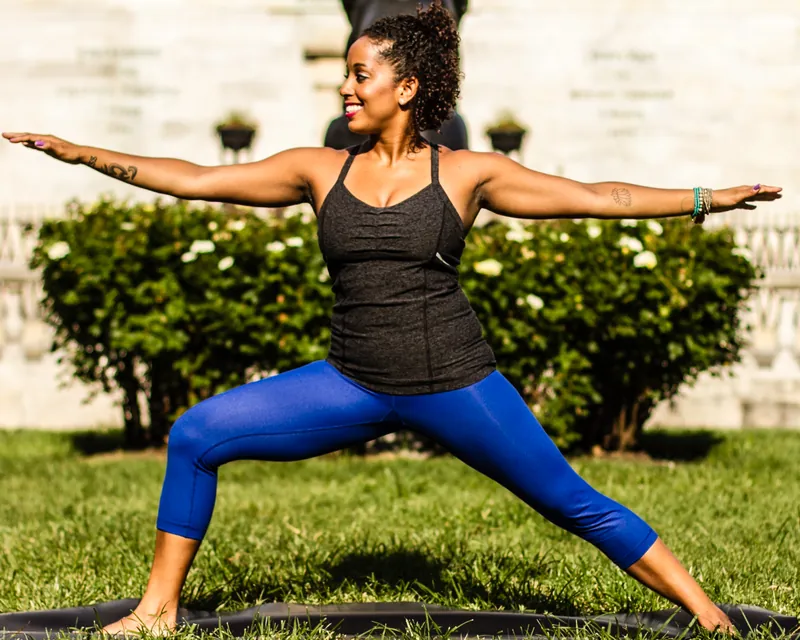
A person holding a wide stance outdoors with the front knee
                        bent and both arms extended level.

What happens when you hold a pose for a whole minute

Long holds are what people find hardest here, and the difficulty is not fitness. What the first, second and third twenty seconds are each like, why the mind gets loud at around forty, and the one rule that decides when to come out early.

Practice11 minute read

A small window set into a weathered log cabin wall, lit from
                        inside.

Practising at home without a studio

What you actually need, what you do not, where to put the laptop so a teacher can see your feet, and what to do about a floor that slopes, a rug that slides, a ceiling that is too low for arms overhead, and a cat with opinions.

Practice10 minute read

What is not written about here

Worth saying, because the gaps are deliberate rather than accidental.

There is nothing here about what yoga does to a condition, a symptom or a body part. Not because the questions are not interesting, but because answering them is medicine and we teach movement. A great deal of writing in this corner of the internet drifts across that line gradually, a sentence at a time, and the only reliable way not to is to not start.

There is nothing about weight, shape or appearance, in any direction. There is nothing about eating. And there is no philosophy — not because it is not worth reading, but because other people write it far better and we would only be padding.

What is left is the mechanics of standing up, which turns out to be plenty.